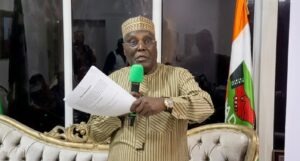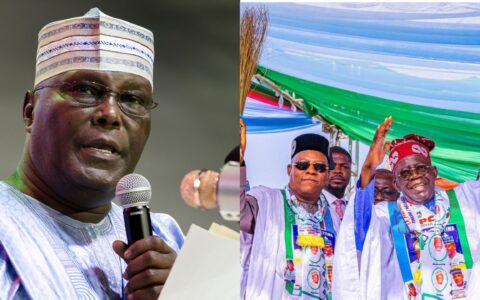

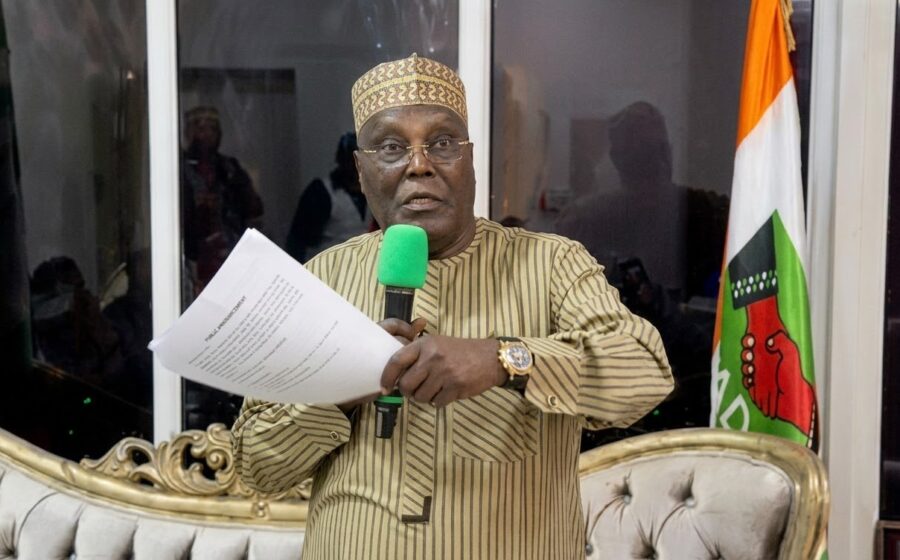
The Presidency has pushed back against a pledge by ADC presidential candidate Alhaji Atiku Abubakar to “open the borders” if elected, saying Nigeria’s land borders are already open and demanding specifics on what controls he intends to remove.
In a statement issued on August 28, 2026 by Sunday Dare, Special Adviser to the President on Media and Public Communication, the government said the Federal Government announced the reopening of most land borders on March 14, 2024, and has not reversed that position. It also cited the February 14, 2026 reopening of the Kamba border in Kebbi State by President Bola Ahmed Tinubu as evidence of ongoing border activity.
“It is therefore difficult to understand which borders the former Vice President intends to ‘open’ when the borders are already open,” the statement said.
The Presidency argued that if Atiku meant relaxing existing controls, Nigerians deserve a clear explanation of which controls would be lifted, why, and what safeguards would be put in place against terrorism, arms trafficking, smuggling, human trafficking and other transnational crimes.
“An open border is not an uncontrolled border,” Dare said. “Modern border management is designed to facilitate legitimate movement, trade and economic interaction while preventing criminals and terrorist organisations from exploiting the same channels.”
The statement linked border management to Nigeria’s security environment in the Sahel and Lake Chad Basin. Citing the Global Terrorism Index 2026, it noted that about 41 per cent of terrorist attacks occur within 50 kilometres of an international border, and about 64 per cent within 100 kilometres. It said borderlands are especially vulnerable where terrain is difficult and state presence is limited.
Because of this, the Presidency said, the deployment of security forces to the Northeast and Northwest corridors “should not be misconstrued as evidence of closed borders. It reflects responsible border security.”
The statement accused Atiku of relying on campaign slogans rather than policy detail. “What Nigerians should reasonably expect from a presidential aspirant is not a slogan about ‘opening borders,’ but a detailed explanation of how his administration would improve border surveillance, strengthen intelligence-sharing with neighbouring states, modernise customs and immigration operations, deploy technology, protect border communities and deepen regional cooperation against terrorism and organised crime,” it said.
It further questioned what “new and credible contribution” Atiku intends to make that is not already part of the Tinubu administration’s reform trajectory, adding that the former Vice President “appears increasingly preoccupied with promising to reverse, reopen, or rename initiatives already being implemented.”
The Presidency concluded that Nigeria’s borders “must be open to legitimate commerce and movement, but secure against terrorists and criminals,” and must be “monitored with technology, led by intelligence, and integrated into the country’s broader national-security and economic strategy.”
Atiku, who served as Vice President from 1999 to 2007 and is now the ADC presidential candidate, had earlier declared he would “open the borders” immediately upon assuming office.