

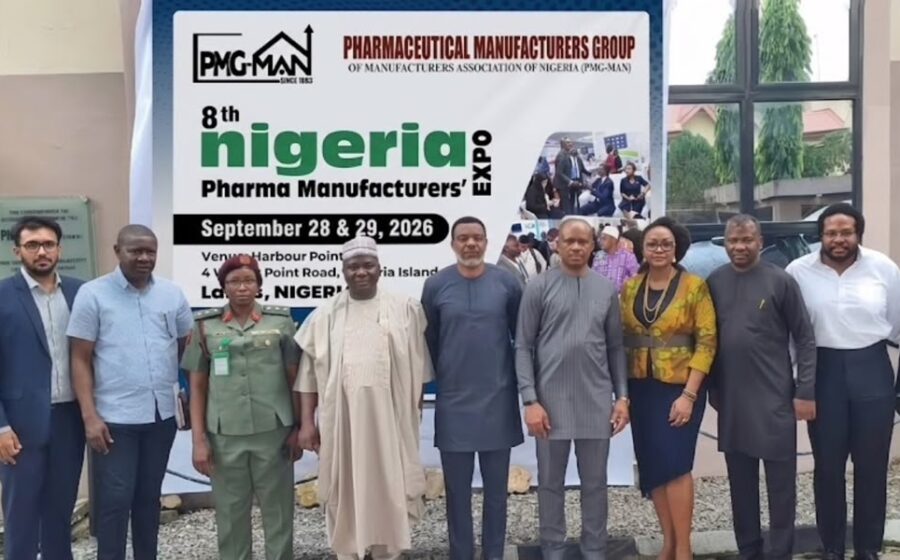
Nigeria’s Coordinating Minister of Health and Social Welfare, Prof. Muhammad Ali Pate, and the Minister of Industry, Trade and Investment, Dr. Jumoke Oduwole, will lead top government officials to the 8th Nigeria Pharma Manufacturers Expo (NPME 2026) as the country pushes to cut reliance on imported medicines and reach 70% local production.
The two-day exhibition is scheduled for September 28 and 29, 2026, at Harbour Point, Victoria Island, Lagos. It will run alongside the Nigeria Lab Expo under the theme, “Regional Manufacturing: Advancing Africa’s Pharma & Lifescience Sovereignty through Localization.”
The event is organised by the Pharmaceutical Manufacturers Group of the Manufacturers Association of Nigeria (PMG-MAN) in partnership with GPE Expo Pvt. Ltd.



Other dignitaries expected include Minister of State for Industry, Trade and Investment, Senator John Owan Enoh; Minister of State for Health and Social Welfare, Dr. Iziaq Adekunle Salako; NAFDAC Director-General, Prof. Moji Christianah Adeyeye; PCN Registrar, Pharm. Ibrahim Babashehu Ahmed; the Special Adviser to the President on Health; and the Director-General of the African Medicines Agency.
Chairman of the NPME Committee, Pharm. Patrick Ajah, said the expo will serve as a platform to attract foreign direct investment, drive technical partnerships, promote local sourcing of raw materials, and strengthen Nigerian manufacturers’ capacity.
More than 200 companies are expected to exhibit, with nearly 10,000 healthcare professionals, regulators, manufacturers and equipment providers projected to attend from five continents.
Progress and challenges
PMG-MAN Executive Secretary, Pharm. Frank Muonemeh, cited NAFDAC data showing imports of finished pharmaceutical products fell from 4.03 billion units to 1.13 billion units as of 2025. That has shifted the ratio of imported to locally produced essential medicines to about 50:50.
He credited part of the progress to regulatory improvements, including NAFDAC’s attainment of World Health Organisation Maturity Level 3 and ongoing work toward Level 4. This, he said, has enabled some Nigerian firms to secure WHO prequalification and take on contract manufacturing for international brands.
But Muonemeh warned that continued dependence on imports remains a threat to health security during global emergencies and supply chain disruptions. He listed high energy costs, limited long-term financing, regulatory bottlenecks, the “Japa” drain of technical manpower, and inconsistent public procurement as key challenges.
Pharmaceutical manufacturers currently spend over 40% of income on electricity and alternative power, compared to less than 10% in hubs like China and India. Muonemeh called for dedicated industrial energy tariffs.
Drugfield Pharma Executive Director, Pharm. Olusola Akande, urged broader incentives for local production of active pharmaceutical ingredients and specialized excipients, noting the current Presidential Executive Order covers only about 5% of those inputs. PMG-MAN also asked President Bola Ahmed Tinubu to extend the Executive Order from two to five years to give investors policy certainty.
Focus on manufacturing, not imports
According to Muonemeh, NPME 2026 will prioritize manufacturers and technologies that support local production. Foreign exhibitors will mainly supply pharmaceutical machinery, analytical instruments and production materials not yet made locally, to ensure direct contributions to domestic capacity.
Ajah said the sector, which has grown from 20 pioneer members in 1983 to over 200 companies, remains committed to Good Manufacturing Practice standards. He also warned that those involved in counterfeit or substandard medicines will face regulatory and law enforcement action.
Organisers said the expo aligns with the Presidential Initiative for Unlocking the Healthcare Value Chain (PVAC) and will support integration under the African Continental Free Trade Area and African Medicines Agency framework.
With senior officials expected to declare the event open, PMG-MAN said NPME 2026 is intended to reinforce government commitment to building a resilient domestic pharmaceutical industry and positioning Nigeria as a leading healthcare manufacturing hub in Africa.