

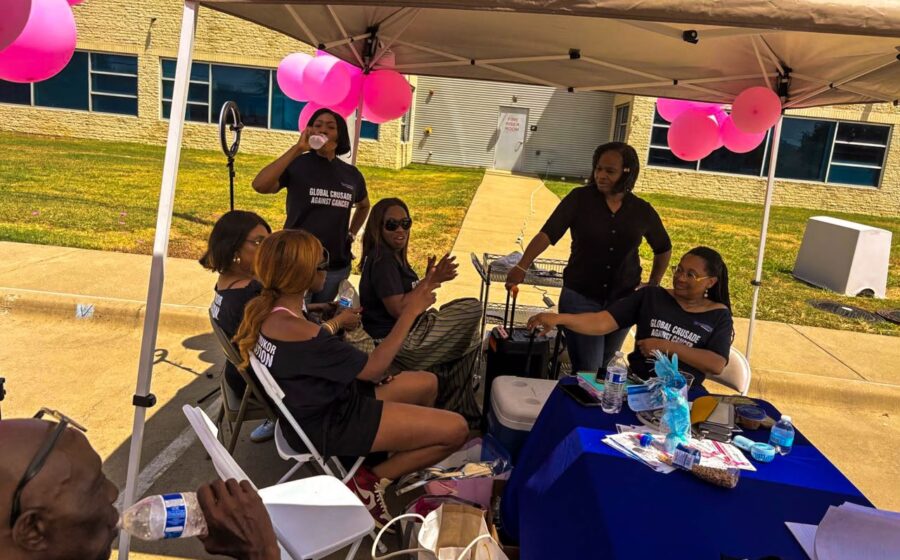
The David Omenukor Foundation has launched its 2026 breast cancer awareness campaign with free mammogram screenings for about 22 underserved and vulnerable women in Mesquite, Texas.
The outreach began Friday, September 4, in partnership with Methodist Health System. Organizers said the goal is to promote early detection and prevention of breast cancer, and to remove financial barriers that often keep women from accessing care ahead of October’s Cancer Awareness Month.
The campaign included an awareness road walk, expert health talks, and free clinical screenings for participants.
“Healthcare should not be a luxury”
Founder and Chief Executive Officer Dr. Keyna Omenukor said the initiative was driven by a commitment to make healthcare accessible and affordable, particularly for women in underserved communities.
“Our annual free breast cancer screenings are part of our commitment to provide accessible and affordable healthcare for women as well as educate the general public on the most common form of cancer affecting women,” Omenukor said.
The Foundation was established in 2015 in honour of her late husband, David Omenukor, who died after battling cancer.
“This foundation is for women and people in healthcare to get care. It was born in honour of my late husband. If cancer could happen to us, I wonder how other people are passing through it. The foundation was created to encourage people to get screened,” she said.
Omenukor described cancer as “an extraordinarily dangerous and ruthless disease” that thrives on delay.
“Cancer is an extraordinarily dangerous and ruthless disease; it does not wait, it does not negotiate, and it thrives on silence, fear, and delay,” she said. “When caught late, cancer is a devastating sentence, but it does not have to be. Screening is the ultimate weapon because early detection turns a deadly threat into a preventable, treatable condition.”
Early cases detected, survivors urge action
Health experts at the event said the screenings identified several cases of breast lumps requiring immediate follow-up. They noted that early discovery creates opportunities for intervention before conditions become life-threatening.
One beneficiary, who lost family medical insurance after her husband’s job loss, said she was able to get a mammogram through a Foundation grant. With a family history of breast cancer after losing her mother to a delayed diagnosis, she urged women not to let fear or cost stop them from getting screened.
Medical professionals also advised regular breast self-examinations and clinical screenings. They called on governments and providers to make screening and treatment more affordable for underserved women.
Speakers expressed concern over late-stage presentations, which they linked to stigma and reluctance to discuss breast symptoms.
“The rate at which women have breast cancer and then stay with it just because they are shy to go to a hospital is worrisome,” Omenukor said. “This campaign is not just about awareness; it’s about saving lives. Cancer does not wait, and neither should we.”
The Foundation also stressed the need for male involvement, noting that men can develop breast cancer and play a key role in encouraging screening in their families.
Expansion plans in Nigeria
Since 2015, the Foundation has expanded outreach across Nigeria and internationally, screening thousands and supporting patients with cancer-related challenges.
Looking ahead, Omenukor said the organization is working to establish a state-of-the-art cancer screening and treatment center in Nigeria, where land has already been acquired. She called for collaboration with the Federal Government, private sector, NGOs, healthcare institutions, and diaspora groups, and proposed mobile mammography units to reach rural communities.
The next phase of the international campaign is planned for the Foundation’s headquarters in Owerri, Imo State, where free screenings will target women facing geographical and financial barriers. Despite security challenges in some rural areas, the Foundation said it is also providing financial assistance for treatment and medical bills.
“What we are doing today is just the tip of the iceberg,” Omenukor said. “Our goal is not merely to offer a one-time screening, but to build a compassionate, sustainable lifeline that reaches the most neglected corners of the world. We will not rest until quality, life-saving cancer care is accessible, affordable, and equitable for every single woman, everywhere.”