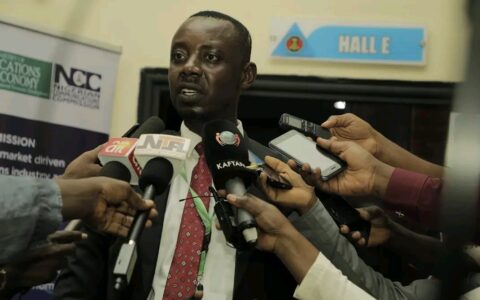


Nigerian journalist Sodiq Omolaoye says the 2027 presidential election will be shaped more by the economy and fuel subsidy than by security, and argues that President Bola Ahmed Tinubu remains the candidate with the clearest path to victory because the opposition is divided.
In a statement on his assessment of the 2027 race, Omolaoye said only three aspirants have what he called “a realistic path to the presidency”: Tinubu of the APC, former Vice President Atiku Abubakar of the PDP, and Labour Party’s Peter Obi.
He deliberately left out Oyo State Governor Seyi Makinde, PRP’s Adewale Adebayo and AAC’s Omoyele Sowore.
“Take Makinde, for instance, his own decision to contest for the presidency is purely due to the Oyo state politics. I don’t see him mounting any serious nationwide challenge for the presidency,” Omolaoye said. “They have no pathway to victory.”
Subsidy replaces security as the defining issue
Omolaoye drew a parallel with 2015, when he said security and Boko Haram defined the contest that saw Muhammadu Buhari defeat Goodluck Jonathan.
“For 2027, I believe that this time around, the economy, and to be more specific, the issues around fuel subsidy removal will be one of the biggest factors that will determine who people would vote for,” he said.
He noted that for the first time since 1999, the three leading contenders are publicly offering three different positions on subsidy. In 2023, he recalled, Tinubu, Atiku and Obi all agreed subsidy had to go, though they differed on timing.
Three years later, the positions have shifted. Omolaoye said Tinubu “continued to defend the removal and the direction of his economic reforms.” Atiku, he added, is now promising a “targeted subsidy” and a return to some form of support. Obi, meanwhile, maintains that removal was necessary but that “the Tinubu’s government did it wrongly” and that subsidy savings “are not properly managed.”
“So we have three candidates essentially offering Nigerians three DIFFERENT arguments,” Omolaoye said.

Despite the split, Omolaoye said his “complete and objective reading of the political situation” leads him to believe Tinubu will still win.
He argued the biggest missed opportunity for the opposition was a failure to unite. Citing figures, he noted that in 2019 Atiku, with Obi as running mate, polled 11,262,978 votes against Buhari’s 15,191,847. In 2023, running separately, Atiku got 6,984,520 votes and Obi got 6,101,533 votes. Together, that is “more than 13 million votes.”
“Of course, elections to you might not be mathematics. And outcomes sometimes can defy data because one cannot simply add two candidates’ votes together and assume all those people would automatically vote for one joint candidate,” he said. “But if you look at it closely, the figures tell us something important. I feel Atiku and Obi have constituencies that complement each other.”
Omolaoye said Obi’s concern about losing his support base by deputising Atiku is understandable, and that voter apathy could be the bigger risk. “What may happen on election day is that some hardcore Obi supporters may just refuse to come out if Obi is not the presidential candidate. Sefini.”
By contrast, he said Atiku supporters “may not really have reservations about Obi” and would likely want his votes.
Tinubu’s advantage
The division, Omolaoye concluded, gives Tinubu his biggest edge heading into 2027.
“And that is perhaps Tinubu’s biggest advantage going into 2027. The irony in this is that the opposition may have enough votes to defeat the incumbent, but would they still like in 2023 do not have the proper political arrangement capable of putting those votes under one roof.”
“Anyone can disagree,” he added