
Nigeria At 66: Our Voice Must Build, Not Destroy – Arewa Youths President Sends Powerful Message To Nigerian Youths
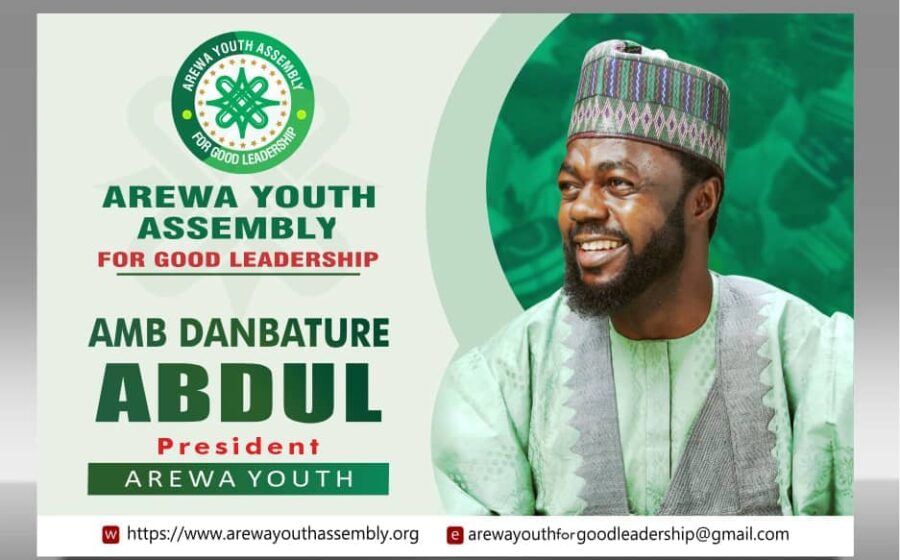
As Nigeria marks its 66th Independence Anniversary, the President of Arewa Youths, Alhaji Danbature Abdul-Hamid, has called on Nigerian youths to use their voices responsibly to promote unity, peace and national development.
In a powerful Independence Day address titled “NIGERIA AT 66: OUR VOICE, OUR UNITY AND THE RESPONSIBILITY OF A NEW GENERATION,” Alhaji Abdul-Hamid extended warm greetings to all Nigerians at home and in the diaspora, particularly the youth, who he described as the energy, strength and enormous potential of the nation.
According to him, October 1 is not just a day for ceremonies, flags and speeches, but a day for deep reflection on what independence means today, what the nation has achieved, the challenges that remain, and the responsibility of the new generation.
“Sixty-six years ago, Nigeria emerged as an independent nation. On October 1, 1960, a new chapter opened in our national history as Nigerians assumed greater responsibility for the administration and destiny of their country,” he said.
He noted that the Nigeria that attained independence was a country of many peoples, cultures, languages, religions and political traditions, with different levels of development and political interests. Yet, the founding leaders understood the necessity of building a country together.
“That historical reality contains an important lesson for us today. Unity does not mean that everybody must think alike. Unity means that, despite our differences, we recognise the common interests that bind us together and choose dialogue, cooperation and nation-building over division and destruction,” he stated.
Alhaji Abdul-Hamid said his most important message to Nigerian youths is that their voice matters and must be used responsibly.
“We live in an age where a young person with a mobile phone can reach thousands, sometimes millions, of people within minutes. Social media has given our generation an unprecedented ability to influence public conversations. But influence without responsibility can become dangerous. Our voice can build or destroy,” he warned.
He urged youths to use their platforms to promote national unity, peaceful coexistence and constructive solutions, rather than spreading hatred and unverified information.
He also called on Northern youths to see their identity as a strength that should contribute to Nigeria, not diminish it, stressing that Arewa must continue to be a voice for peace, unity, education, development and national integration.
Reflecting on the legacy of Nigeria’s founding fathers like Sir Abubakar Tafawa Balewa, Dr. Nnamdi Azikiwe, Chief Obafemi Awolowo, Sir Ahmadu Bello and Herbert Macaulay, the Arewa Youths President said they were not perfect men and did not always agree, but they demonstrated that it was possible to pursue different political visions while still building a common country.
He particularly highlighted the legacy of Sir Ahmadu Bello, the Sardauna of Sokoto, noting that his emphasis on education, human capital development and institution-building remains relevant, citing the establishment of Ahmadu Bello University in 1962 as a powerful example of building for the community while contributing to the nation.
“Build for your community, but build in a way that contributes to the nation. Invest in your people, but do not teach them to hate other people,” he advised.
Alhaji Abdul-Hamid stressed that at 66, Nigeria does not need a generation that only complains, but a generation prepared to participate in fixing what is wrong through agriculture, entrepreneurship, innovation, teaching and responsible public service.
On the economy, he called for a national conversation on moving Nigerians from dependence to productivity through skills acquisition, vocational education, support for small businesses and digital innovation.
“No country can develop without peace. No economy can flourish where communities are constantly afraid,” he said, appealing to youths to reject ethnicity and religion as excuses for violence.
He concluded with a message of hope, expressing conviction in the future of Nigeria and the creativity of its young people, while urging citizens to work, build, defend and sacrifice for the nation.
“Sixty-six years after independence, our story is still being written. Let us ensure that the chapter written by our generation is a chapter of courage rather than fear, cooperation rather than division, production rather than dependency, innovation rather than stagnation, and unity rather than hatred,” he said.